- Power
- 103 PS
- Torque
- 132 Nm
- Weight
- 865 kg865–868
- 0–100 km/h
- 9.2 s8.8–9.6
- Top speed
- 195 km/h
- PS / tonne
- 119
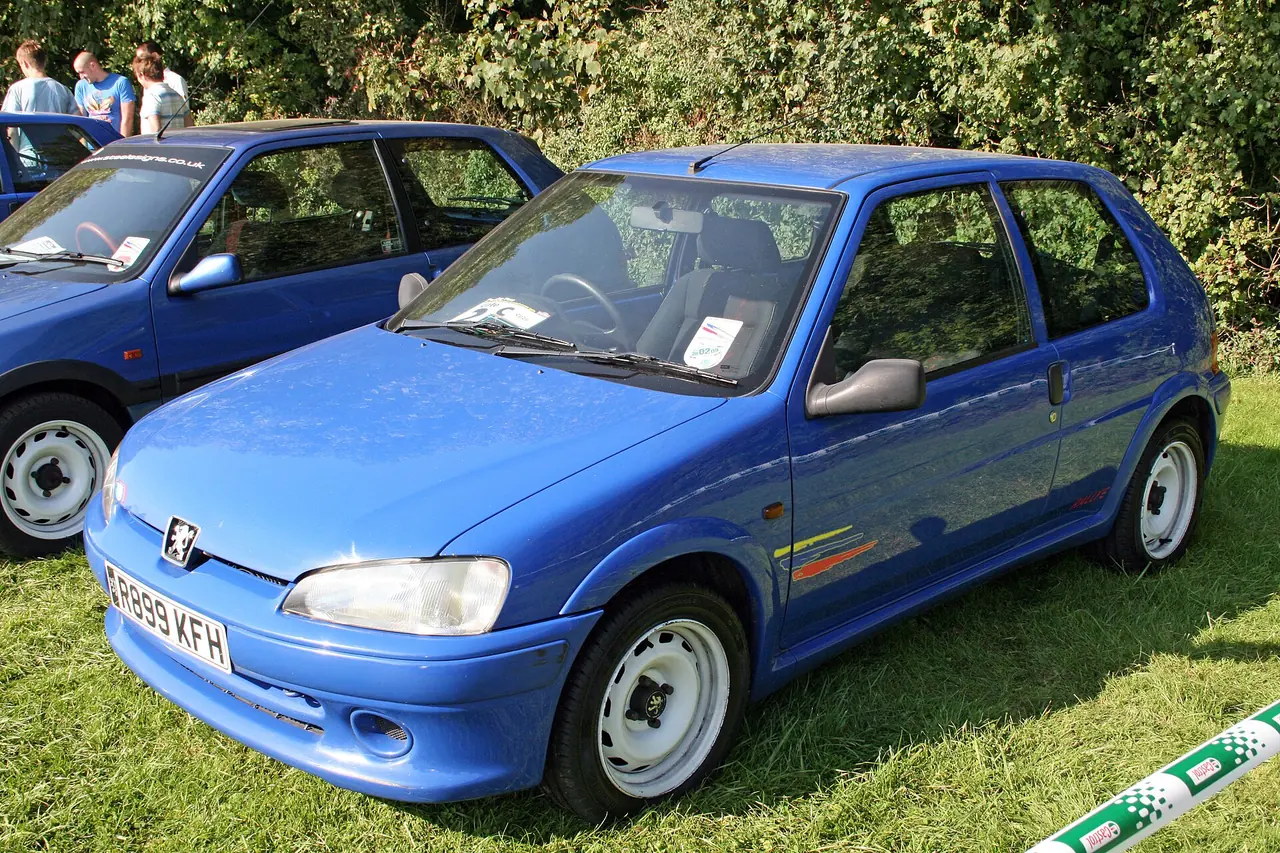
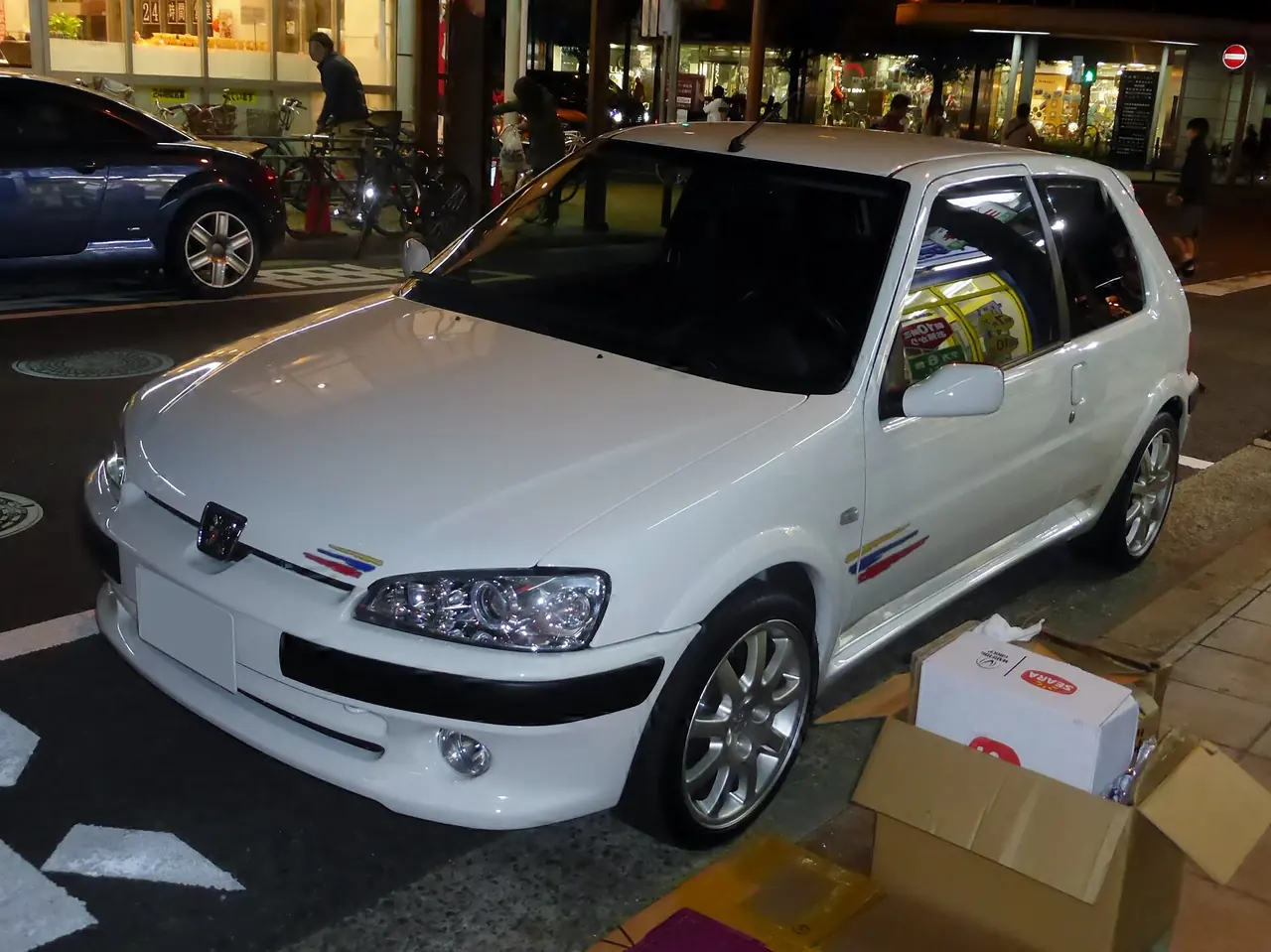
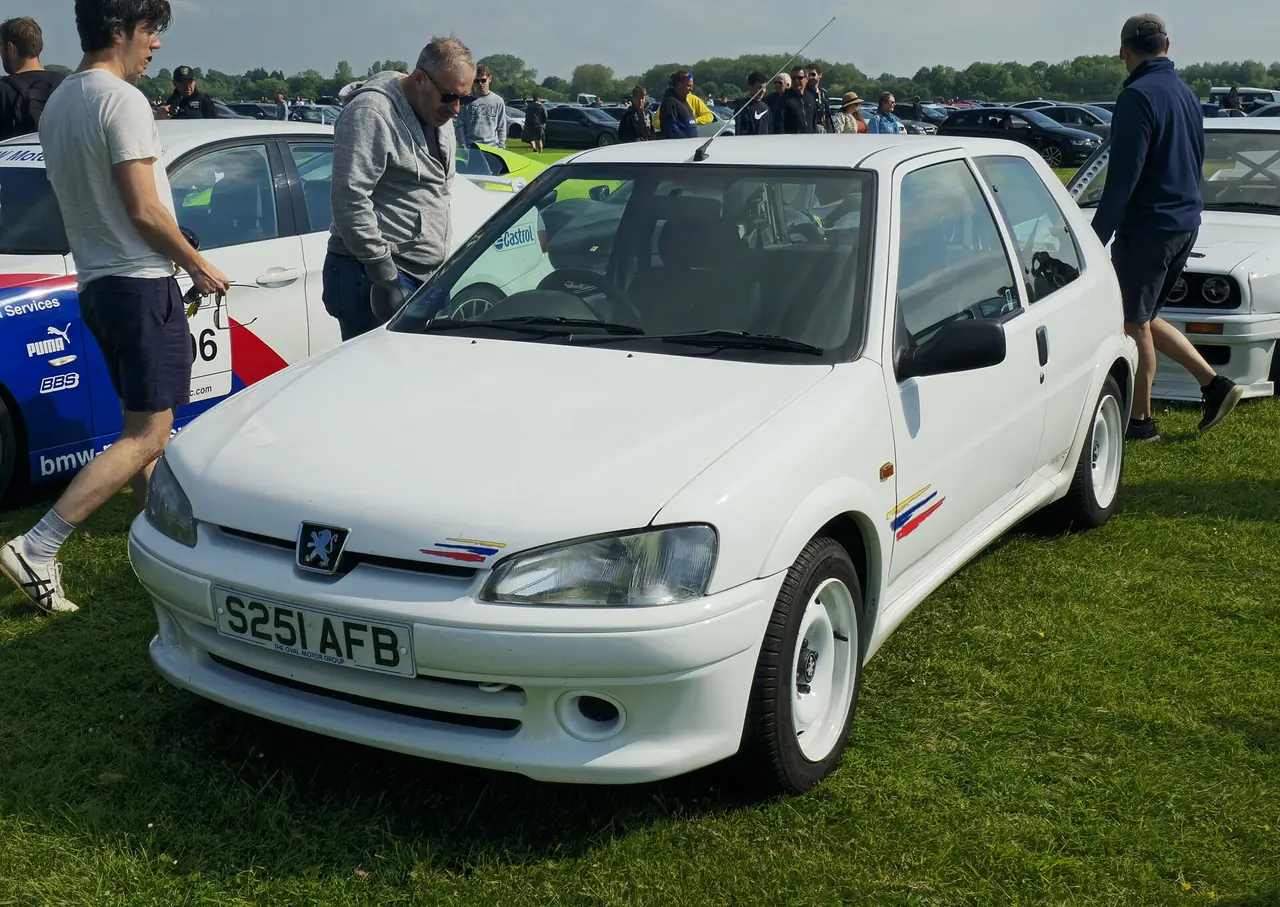
With the facelift, the Rallye got a bigger engine: the 1.6 TU5J2 with 103 PS and 132 Nm at just 3,500 rpm, against the S1's 108 Nm at 5,400. It weighed about 40 kg more, gained brakes and wheels, and lost the sharp edge of the original.
Sébastien Loeb's first rally car was a 106, and the 106 Cup one-make series launched many more careers. The S2 is quicker on real roads and less peaky, and a little less like a competition car with number plates.
Specification
- Engine
- 1.6 TU5J2 (8v)
- Gearbox
- Close-ratio 5-speed manual, 4.06:1 final drive
- Drive
- Front-engine, front-wheel drive
- Brakes
- Front discs; rear type reported inconsistently
- Wheels
- Larger than S1 (steel)
- Body
- 3-door hatchback
- Aspiration
- Naturally aspirated
- Production
- 500 Approximate right-hand-drive cars for Britain only
- Dates
- 1996–00 Sources date the second series between 1996 and 2003
Signature details
- 1.6 8v, 103 PS
- 132 Nm at 3,500 rpm
- Phase II bodywork
- About 865 kg
Equipment
- Peugeot Sport stripes
- Colour-coded arches
- Airbag-era interior (Phase II)
About the data
- Acceleration and rear-brake type differ between sources. Both are marked disputed.
In the record
- 1990s–2000s — 106 Cup and national one-make series: The 106 Rallye ran in Group N, Group A, national championships, Peugeot Sport meetings and one-make cups. Peugeot Sport sold parts for suspension, brakes, gearboxes, limited-slip differentials, roll cages and engines. The Cup is remembered as a talent pool: Mark Fisher, Kris Meeke, Cédric Robert, Alex Bengué and Daniel Sola all came through.